Blog

Melody Mondays: Ain't No Grave Gonna Hold Claude Ely's Body Down

Shane

“There ain’t no grave gonna hold my body down

There ain’t no grave gonna hold my body down

When I hear that trumpet sound I’m gonna get up out of the ground

‘Cause there ain’t no grave gonna hold my body down”

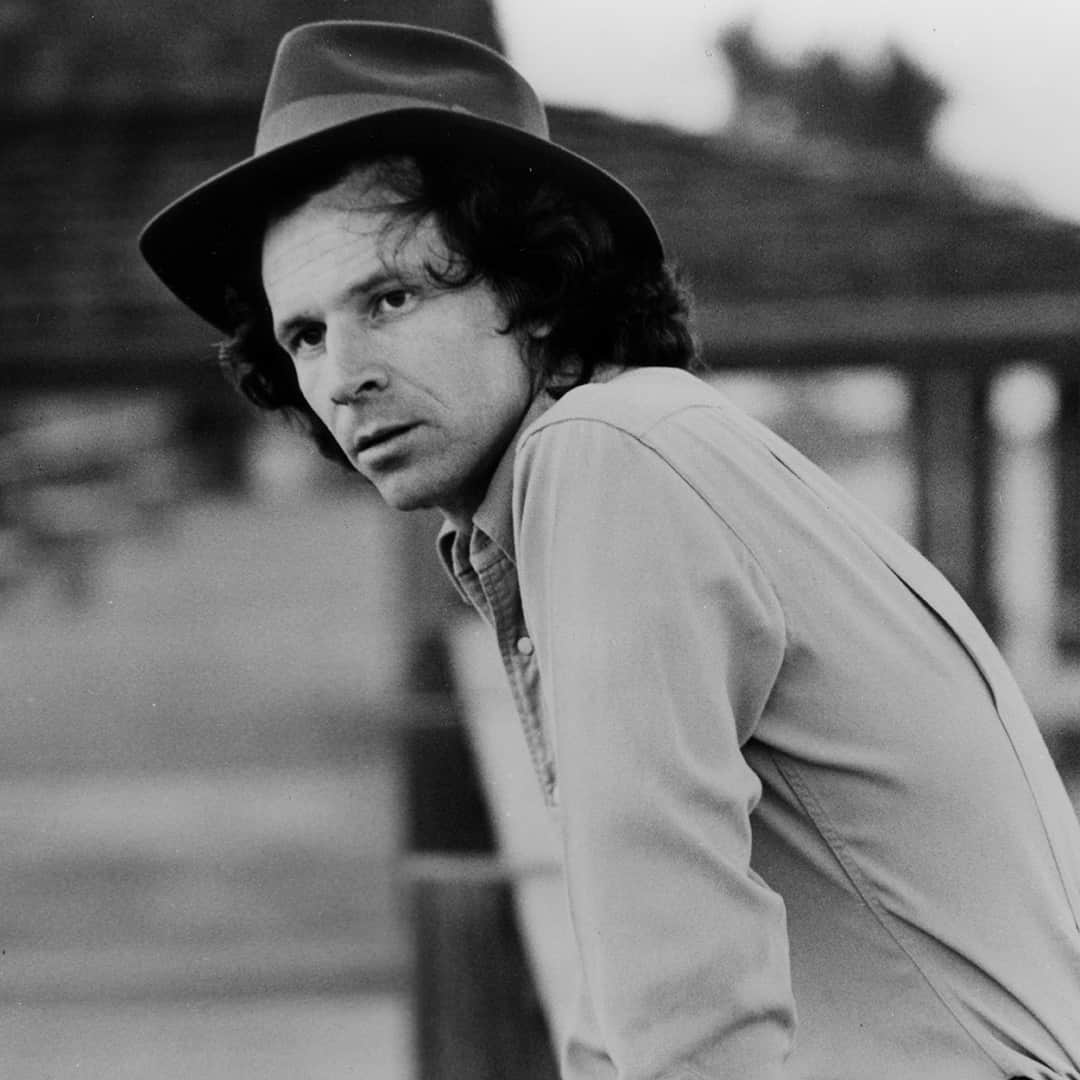
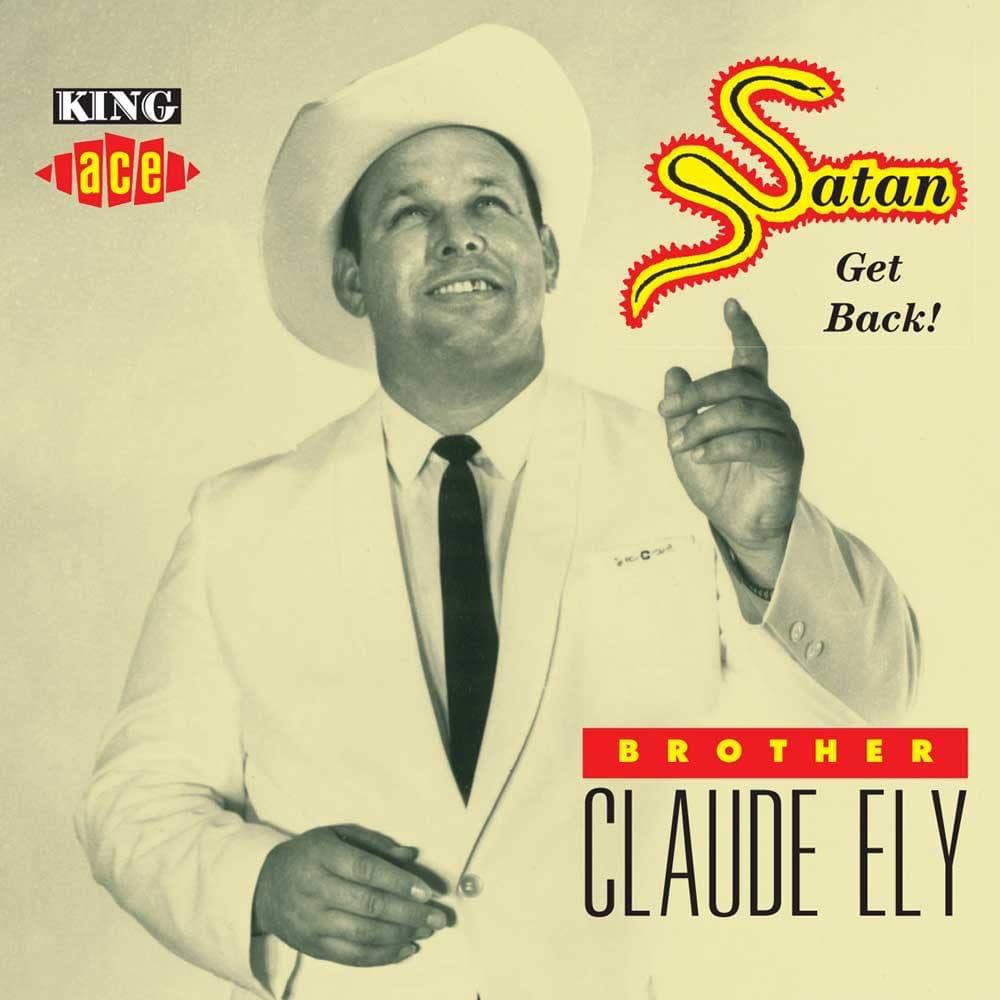
Brother Claude Ely’s Album Cover.

You might not be familiar with the name “Brother” Claude Ely but if a “Mount Rushmore of Pentecostal Holiness Gospel Singers” existed then his face would most certainly be prominently displayed. The snake-handling variety of Pentecostals seem to soak up most all of the spotlight when it comes to religion in Appalachia because, well, they pick up deadly snakes, drink poison, and play with fire for crying out loud.

Having said that, the Pentecostals who don’t practice snake-handling make up a far greater number of churchgoers throughout Appalachia.

The life story of Brother Claude Ely doesn’t need snakes, poison or fire to be entertaining. Claude Ely was born in Lee County, VA, in what we Appalachians call a “holler” known as Puckett’s Creek near Pennington Gap on July 22, 1922. At the young age of 12, Ely fell ill and was given what was thought to be a fatal diagnosis of tuberculosis.

Brother Claude Ely sporting his signature gold tooth.

Despite his grim prospects, young Claude spent much of his sick time learning to play a guitar that an uncle had given him. One day during this period in his life, Ely’s family gathered around his bed to pray for him when Claude boldly proclaimed, “I’m not going to die.” Claude then began to sing a song he’d written while on what doctors presumed would be his deathbed, “There ain’t no grave gonna hold my body down! There ain’t no grave gonna hold my body down!”

Defying the terminal medical prognosis, Claude recovered from his affliction with renewed faith and a powerful message. Claude Ely would later go on to work in the coal mines of Harlan County before and after serving in the military during World War II.

Claude felt the calling to preach in 1949 and he answered the call with a fervor as he soon earned the title of the “Gospel Ranger.” Ely conducted revivals throughout Eastern Kentucky, East Tennessee, and Southwest Virginia, gaining a following due to his reputation for fiery sermons and impassioned singing.

Brother Claude Ely with a Bible in one hand and a guitar in the other.

Claude Ely had a larger than life persona as he was an imposing, husky man who sported a gold tooth while often wearing a white cowboy hat and matching white suit. As he came to each new town, Ely would drive through with a bullhorn shouting out an invitation to his tent meetings where he proclaimed attendees could “experience the fire and Holy Ghost.”

Claude Ely was approached by King Records while ministering at the Free Pentecostal Church of God in Cumberland, Kentucky, to record his singing for commercial distribution . Ely allowed recordings to be made of one of his live sermons in 1953 making him the first Pentecostal Holiness recording artist to sign with a major record label.

Claude Ely’s popularity spread even further with the release of the song he’d written as a sickly 12 year old boy. “There Ain’t No Grave (Gonna Hold My Body Down)” went on to become an anthem and a staple of Pentecostal churches for years to come. Claude Ely would spend the remainder of his life preaching fire and brimstone while singing with that same conviction to save lost souls.

Video of Brother Claude Ely singing “Ain’t No Grave.”

On May 7, 1978, Ely suffered a massive heart attack in front of the congregation at his home church of Charity Tabernacle in Newport, Kentucky (just across the river from Cincinnati, Ohio.) Ely was playing the organ and singing “Where Could I Go But To The Lord” when he suddenly fell backward midway through the song. Churchgoers began to cry out and pray over him but to no avail as Claude Ealy passed away at the age of 55.

Ely was brought back to southwest Virginia where he is buried at a cemetery in the town of Dryden in Lee County.

Although he has been gone for over 40 years, Claude Ely is still well remembered in many Pentecostal corners of Appalachia. Among Ely’s fans was one Gladys Presley, mother of a young man you might know as Elvis Presley, who is said to have brought Elvis to at least one of his tent revivals to have Ely lay hands on them in prayer. Elvis was later inspired by Ely’s version of “There’s a Leak In This Old Building/You’ve Gotta Move” to sing a rendition of the song under the name “We’re Gonna Move” for his film “Love Me Tender.”

Johnny Cash would record a version of Ely’s “Ain’t No Grave” that was released posthumously in 2010 (the song also included musical contributions by the Avett Brothers.) I am a huge fan of Johnny Cash but I can tell you that Claude Ely’s version is night and day better than Johnny’s version. I personally remember being in church as a small child thinking to myself the toddler equivalent of, “this joint is gonna start jumpin’ now” when they would start singing “Ain’t No Grave.”

If you haven’t heard the song, just watch this YouTube link in this post so you can get a sense of what it sounds like when done up-tempo. Some of our Pentecostal followers can verify my claim that this song will bring the house down when done well. I have attended numerous concerts spanning many genres of music, but I have never seen any performance that can whip a crowd into a sing-along/clap-along frenzy like a passionate rendition of “Ain’t No Grave” in a little country church deep in these hills…can I get an amen?
Melody Mondays: Doc Watson's "Sitting on Top of the World"

Melody West

What would be Melody Mondays without some Melody quirkiness? Anyone who knows me knows I’m an old soul.  I think that’s why I have such a love of history, antiques, old time music, etc. All these things run deep in our beloved Appalachia. 

The Appalachian artist I chose to feature today hails from Western North Carolina and makes me feel like I’m stepping back into simpler times whenever I listen.  Bluegrass, gospel, country, blues, and folk – all these genres have been picked and sang by the very talented, Doc Watson.

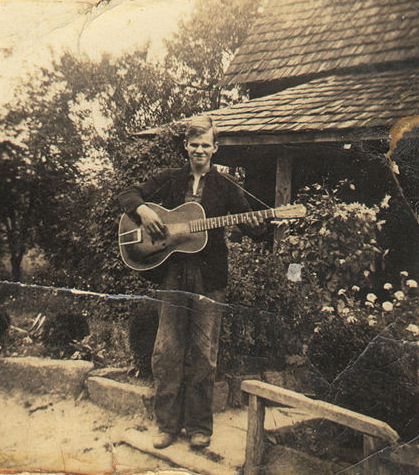
Doc was born Arthel Watson in Deep Gap, NC, just a little east of Boone.  The nickname “Doc” was given to him during a live radio broadcast when the presenter said his first name was odd and he needed a good nickname.  A member of the live audience shouted out “Doc!,” most likely from the Sherlock Holmes stories and his companion, Doctor Watson.  And the new nickname stuck!

Doc was blind from infancy, but didn’t let that stop him from exceling in the music world.  He worked chopping trees at a young age to earn money to buy his first guitar from Sears and Roebuck and drew early inspiration from the Carter Family and Jimmie Rodgers. Playing both in bands and solo, Watson won 7 Grammy Awards and a Grammy Lifetime Achievement Award in his career.

He is even responsible for Old Crow Medicine Show’s claim to fame, but that’s a story for another Melody Monday…..

The song I chose to share today is “Sitting on Top of the World.”  Originally written and recorded by the Mississippi Sheiks, I love the folksy feel Doc brings to his version.  I can listen to it and feel like whatever is going wrong, I can just relax and feel like “I’m sitting on top of the world” anyways.

A Single Photo From The Coal Boom Days That Tells A Thousand Stories

Shane

I just found this photo and I’m in love with it because this picture truly says a thousand words, as the old saying goes. 

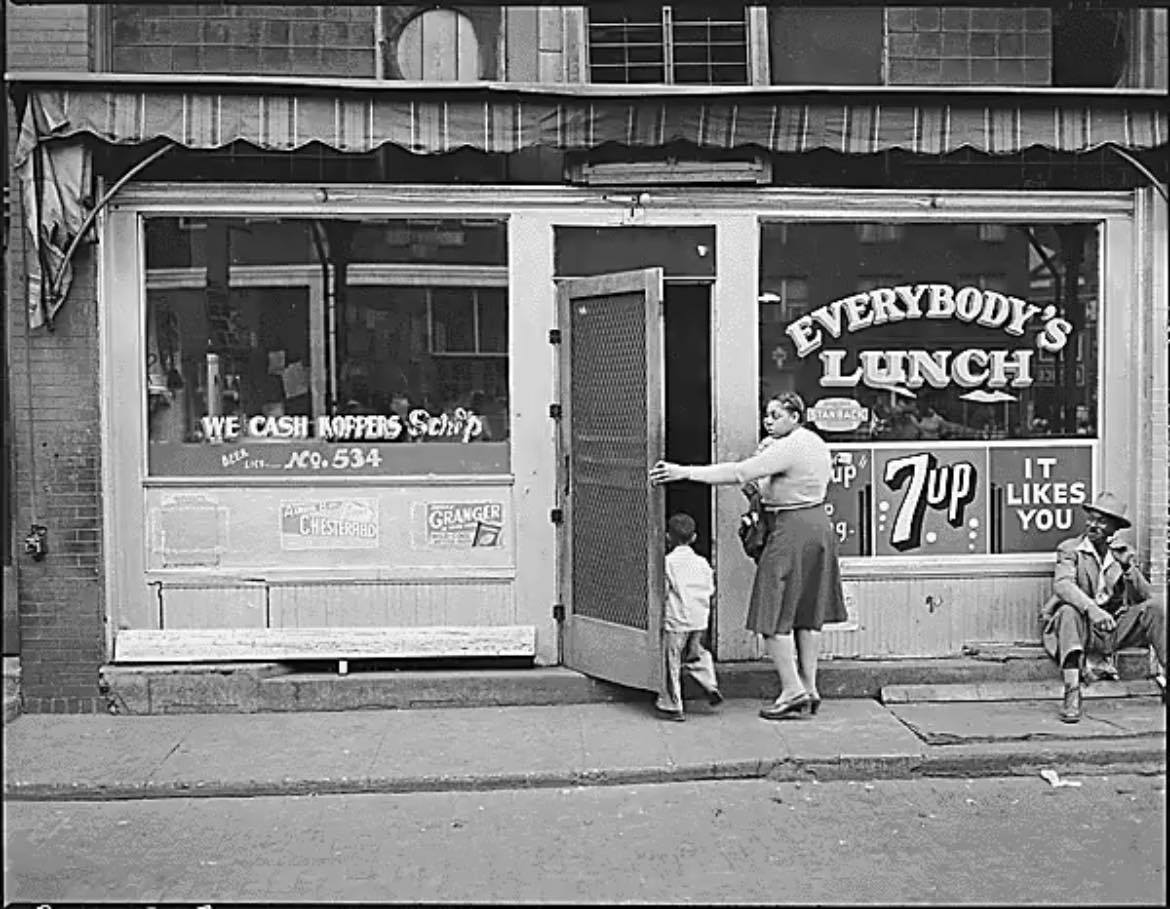
It is from Welch, West Virginia in the 1940s. The first thing that jumped out at me was the writing on the lower left of the restaurant’s window. It says “We Cash Koppers Scrip” – a reference to the scrip issued to miners rather than cash from the Koppers Coal Company for use in their company stores to purchase food, clothing, and other basic necessities.

The “Everybody’s Lunch” in Welch, West Virginia – 1946.

Scrip was initially not transferable until the Fair Labor Standards Act of 1938 outlawed the practice, which had previously completely locked in a miner to spending the scrip in the company store without option. Local businesses took advantage of the change in law to offer cash in exchange for scrip (at a cost, of course). Of course, it wasn’t nearly as beneficial in those instances where the coal camp was so remote that the town couldn’t sustain an alternative to the company store.

The practice of using scrip was finally banned altogether in 1967. 

A piece of scrip from the Koppers Stores – this one being of the not transferable type.

Not coincidentally, the establishment lists its beer license right under that statement as beer wouldn’t have been available in the company stores. They say necessity is the mother of invention but time has revealed to me that profit must be the father of invention. Sadly, alcohol has always been a factor in the coalfields. where the men toiled long days doing backbreaking work who were often desperate for some type of escape from the pain in their bodies or the loneliness in their minds. This demand for alcohol married with local businesses cash registers to create a new way for coal miners to lose the value of their hard-earned dollars, as these scrip exchanges came with a fee.

I would also like to point out how well-dressed the gentleman is sitting on the stoop. It was an different era in so many ways – days that have truly gone by.

The coal boom has passed and the scrip system has long been a memory so it is great that folks took the time to capture these moments on camera for us all to see and learn from.

Melody Mondays: Gary Stewart - Country Music's Most Underrated Singer?

Shane

Well, the bad news is it is Monday…the good news it is a Melody Monday! We both love music and hope you do too, it is a great way to get the ol’ blood flowing and the heart pumping to start out the workweek. The feature this week is Gary Stewart.

Gary Stewart was born in Jenkins, Kentucky back in 1944, the son of a coal miner and a housewife in Letcher County. In a story that has been all too common in coal country, Stewart’s father suffered a devastating injury that ended his career in the coal mines when Gary was just 15 years old. The family was forced to move and, unlike so many others who went north on the “Hillbilly Highway,” the Stewarts moved south to Florida, settling in Fort Pierce.

The late, great Gary Stewart.

The musically talented Stewart began playing in both rock and country bands while in his teens, eventually encountering the great Mel Tillis, who e-e-e-e-encouraged (can’t help but reference Tillis’ famous stuttering) Gary to move to Nashville. He took the advice and headed to Music Row, where he met with some success as a songwriter but eventually retreated back to Florida after becoming disillusioned with the country music industry in 1970.

Gary Stewart suffered numerous setbacks and failures in the years following before finally getting a breakthrough with RCA Records in 1974 when his single “Drinkin’ Thing” slipped into the country Top 10 charts. His follow-up song “Out of Hand” went even higher to #4 on the chart to continue his momentum. He then hit #1 in 1975 with his smash (and my personal favorite) “She’s Actin’ Single (I’m Drinkin’ Doubles).” Here is the link to the song but be forewarned that the lyrics will reach into your chest and rip your heart out if you’re not careful and have been in a similar situation:

While never reaching those heights again, Stewart continued to successfully record and tour for the rest of the 1970s. He developed a cult following and was labeled a brilliant “honky tonk” singer but never really elevated beyond that status as he was slapped with the dreaded label of being “too rock for country, too country for rock.”

He teamed up with legendary songwriter Dean Dillon (who wrote so many great songs for George Strait) in the 1980s but soon began getting pulled in by his demons of alcoholism and drug addiction, which slowed his recording to a crawl. The death of his son Gary Joseph Stewart, lost to suicide, sent him further into a downward spiral.

He resumed touring in the late 1980s and recorded more albums in the 1990s but was never a major draw for the remainder of his career.

Gary Stewart returned to Letcher County on September 2, 1998 as the guest of honor for the Jenkins Days festival, and served as grand marshal for a parade through town. He was also present for the official dedication of the Letcher County portion of the Country Music Highway (U.S. 23), which is named in his honor. He ended the day by performing a free concert for a crowd of more than 5,000.

Gary Stewart’s wife of 42 years, Mary Lou, succumbed to pneumonia in November of 2003 and Gary Stewart’s will to live died with her. Having been married since he was 17, the distraught Stewart cancelled his scheduled performance at Billy Bob’s Texas before tragically ending his own life December 16, 2003, at the age of 59, less than a month following his wife’s demise.

Gary Stewart is still one of the most respected performers by fellow musicians and singers, even Bob Dylan is a big fan of his music. There’s no greater compliment than the respect of your peers. Gary Stewart accomplished a lot in his life, not a bad day’s work for the son of a coal miner – he did Appalachia proud and I hope he finally found the peace he sought.

Melody Mondays: Patty Loveless - A 2 for 1 Special!

Melody West

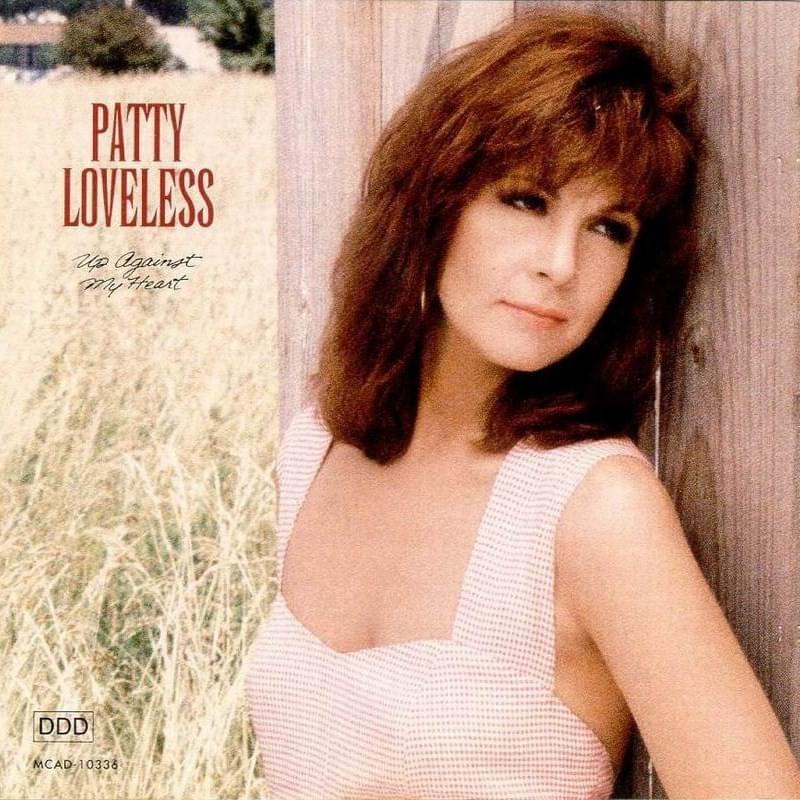
We’re back at it this week with another Melody Monday! This week we thought we would feature Kentucky native, Patty Loveless.  I’ve loved Patty Loveless since I was a little one dancing in my cowboy boots to “Blame It On Your Heart.”  This song was a big part of the 1993 movie “The Thing Called Love,” with River Phoenix, Samantha Mathis, and Sandra Bullock.  The song also reached #1 on Billboard charts. Patty has had four additional songs hit #1 on the charts.  Quite the feat for a small-town Appalachian girl!

Patty Loveless was born Patricia Ramey, a coal miner’s daughter, in Pikeville, KY and raised in nearby Elkhorn City.  She started touring with the Wilburn Brothers after high school and married their drummer, Terry Lovelace.  She made a play on words and became the Patty “Loveless” we all know and love.  It wasn’t until the mid-80’s though, when Patty was in her late 20’s, that she pursued a solo country music career and was signed to a label. It didn’t take long for her musical career to take off.

Since then, Patty Loveless has also released a few bluegrass albums.  While she is primarily in retirement now, she and Chris Stapleton (another Kentucky native) gained a lot of attention for their amazing and chilling rendition of “You’ll Never Leave Harlan Alive.”  Both Loveless and Stapleton also performed in a benefit concert for the 2022 KY flooding victims. Patty Loveless is an inspirational Appalachian female artist with one incredible career, so take some time out of your week to give her music a listen!

A Mysterious Misty Mountain Morning

Shane

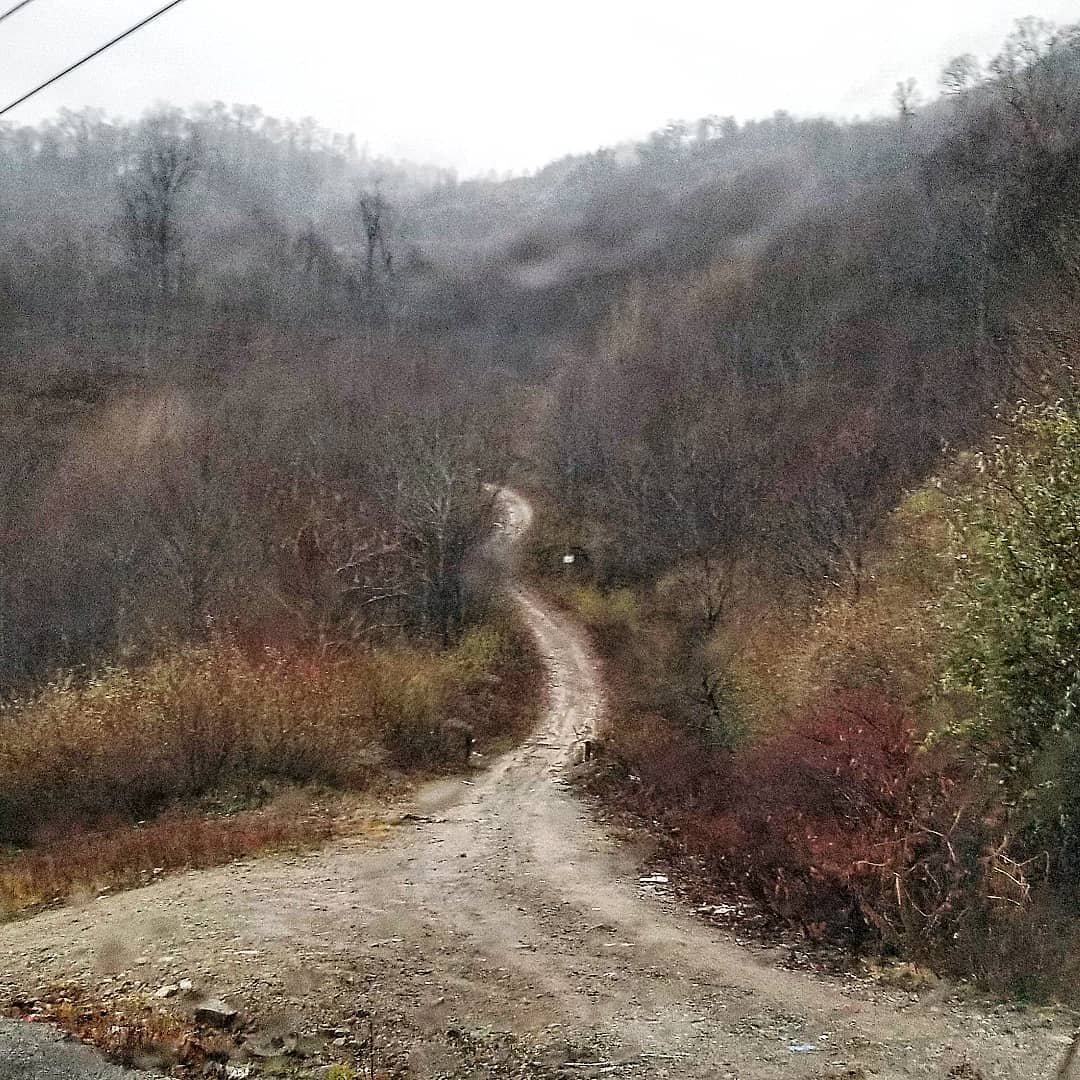
A hazy, misty morning road on a seldom traveled backroad snaking up the hillside and disappearing out of view. It just seems like the perfect road to lead to some mysterious and potentially foreboding destination.

I normally don’t like traveling alone but, occasionally, it allows some time for introspection. I zoned out while driving and really didn’t even know where I was at when this view grabbed my attention. I was in a little bit of a hurry to get to my destination but I couldn’t resist stopping to soak up the scene.

I turned my car off and stepped out to check it out and grab this pic. It was another place that was eerily quiet, the only thing I heard was the sound of gravels crunching beneath me as I walked toward the road.

I got to the foot of the hill and just paused. I took this picture then stood still scanning the whole scene. It was a little chilly but that mountain air was so crisp and clean that I closed my eyes and filled my lungs several times to absorb as much as I could.

I opened my eyes back up and just stood there a little longer just to get a little more of the experience. A lot of times in life you aren’t aware that you’re in “a moment” until it is over with, but this time I knew full well I would this one.

I really don’t need to see this picture because the memory is seared in my mind but I wanted to share it with y’all and I hope you like it.

Melody Mondays: "Lean On Me"

Melody West

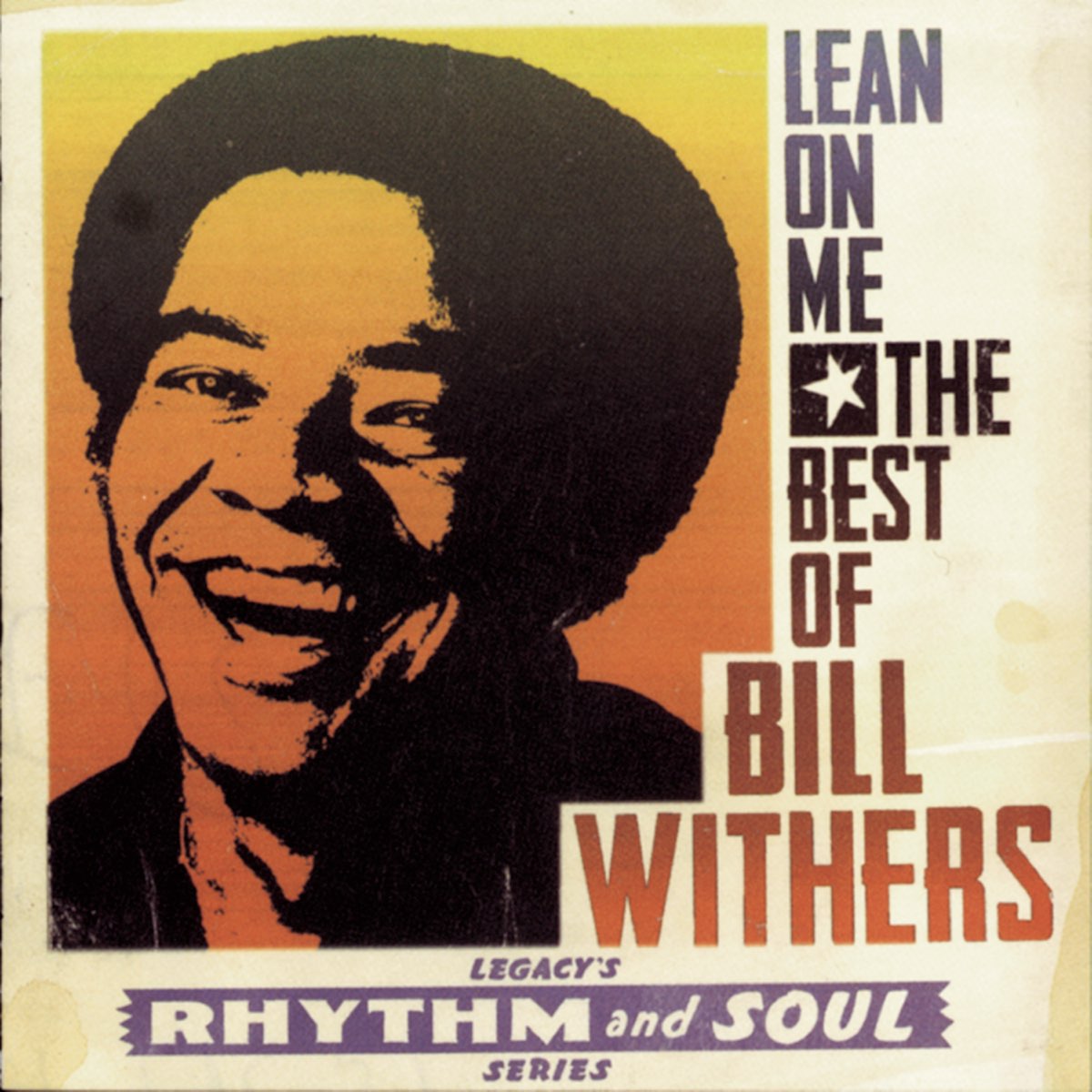
We all know Monday isn’t the most popular day of the week, but it’s about to get a little better with our Melody Mondays! Music nourishes the soul and always makes me feel better, even when I’m in a low spot.  That inspired me to choose “Lean On Me” by Bill Withers this week.

Bill Withers was born in Slab Fork, West Virginia and grew up in nearby Beckley.  Son of a maid and a coal miner, he developed his interest in creating music during his time in the military.  He was a true artist, weaving together beautiful words of love and inspiration.

“Lean On Me” is one of those songs that has always brought out emotion in me.  It’s a sincere and sweet reminder that we all face struggles but how important it is to lean on each other to get through those hard times.

If you’re struggling today, I hope you’ll find your people.  The ones who clap when you win and give you a shoulder to cry on when you’re down.  If you’re on top of the mountain today, be grateful and be that shoulder for someone else.  Check in on those you love.  Give your smile to strangers. Let’s all work on being light in others’ lives because like Bill wrote, “we all need somebody to lean on.”

Lean On Me

Bill Withers

“Sometimes in our lives
We all have pain
We all have sorrow

But if we are wise
We know that there’s always tomorrow

Lean on me
When you’re not strong
And I’ll be your friend
I’ll help you carry on…

For it won’t be long
Till I’m gonna need somebody to lean on

Please swallow your pride
If I have things you need to borrow

For no one can fill
Those of your needs that you won’t let show

You just call on me brother when you need a hand
We all need somebody to lean on

I just might have a problem that you’ll understand
We all need somebody to lean on

Lean on me
When you’re not strong
And I’ll be your friend
I’ll help you carry on…

For it won’t be long
Till I’m gonna need somebody to lean on

You just call on me brother
When you need a hand
We all need somebody to lean on

I just might have a problem that you’ll understand
We all need somebody to lean on

If there is a load you have to bear
That you can’t carry

I’m right up the road
I’ll share your load
If you just call me

Call me
If you need a friend
(Call me)
Call me (call me)
If you need a friend
(Call me)
If you ever need a friend
(Call me)
Call me
(Call me) Call me
(Call me) Call me
(Call me) Call me
(Call me)

If you need a friend
(Call me)
Call me
(Call me) Call me
(Call me) Call me
(Call me) Call me
(Call me)”

Williamson, West Virginia: The Story Of The Heart Of The Billion Dollar Coalfields

Shane

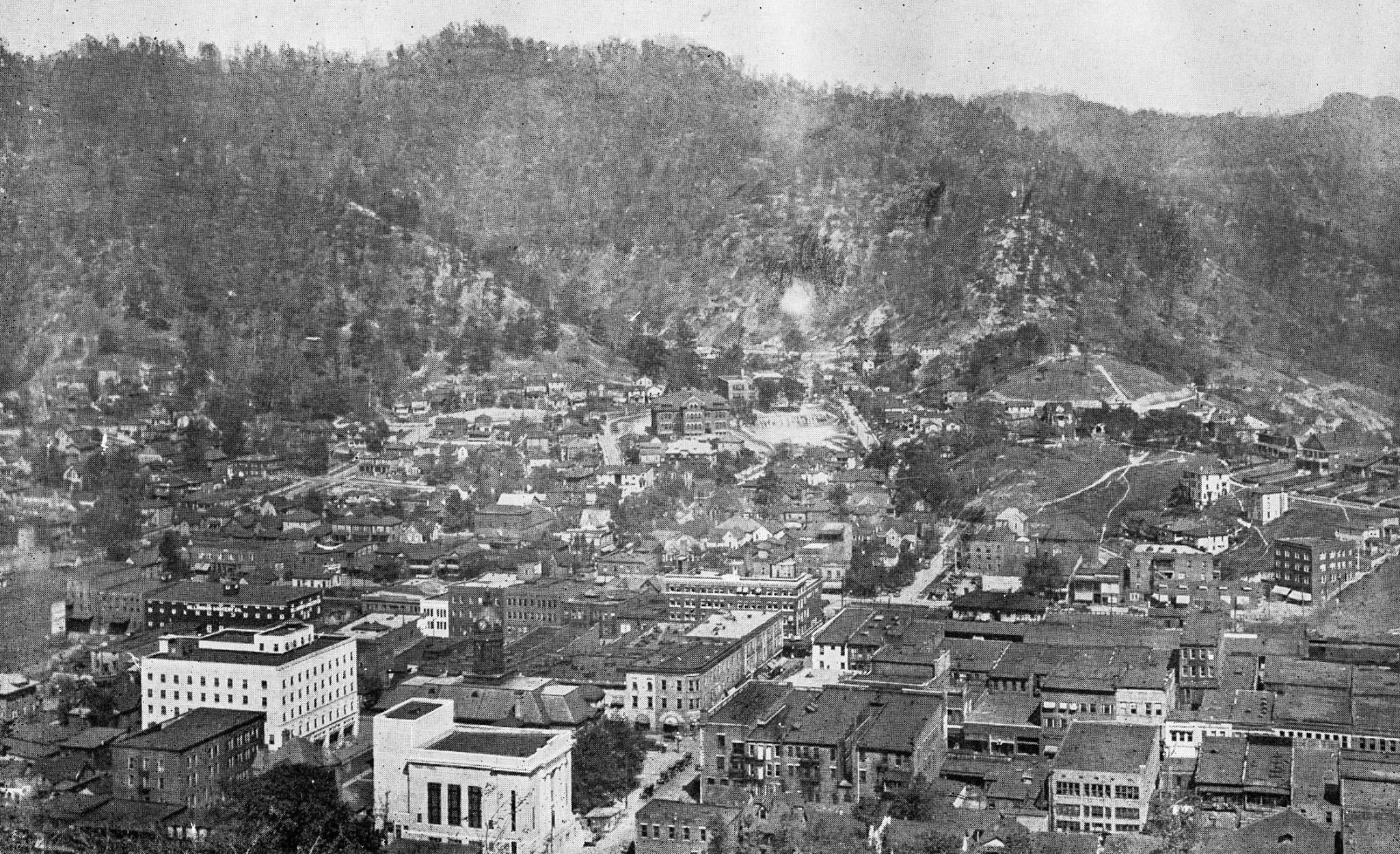
Williamson, West Virginia, in Mingo County is a city that is known as the “Heart of the Billion Dollar Coalfields.” A visit to Williamson is a must for anyone curious about coal history in Appalachia. Williamson is one of the many locations in the coalfields to currently be in transition from its coal-centric past to a more diverse economy.

Williamson in 1927.

The area that is now Williamson was once part of a single-family owned farming property of John Green as granted by the Commonwealth of Virginia (prior to the birth of West Virginia) in 1795. The land was sold off through the years until a large parcel ended up in the hands of what would become the city’s namesake family led by Benjamin Williamson in 1858 (many feel the city was actually named for Benjamin’s son, Wallace J. Williamson.) The Williamson family ended up conveying the land to the Williamson Mining and Manufacturing Co. in 1891.

The nightlife of Williamson in 1937.

The railroad that would soon become known as the Norfolk & Western Railway began to lay track and the year 1901 saw coal mining begin to take hold in the Williamson area.

Video of Williamson as it looks these days.

Williamson continued to grow in population and wealth as it became a major hub for the mining and railroad industries. In 1905, Williamson had grown to the point that it became chartered as a city. The early city experienced problems with fires as many of the buildings and homes in the area were built from the plentiful wood in the area. Williamson continued to grow and flourish despite these setbacks.

The prosperity led to the development of one of the most unique landmarks in all of Appalachia, the Coal House Building, in 1933. The concept of the Coal House Building owes to the then manager of the Norfolk & Western Railways Fuel Department, O.W. Evans. The Coal House Building was built as a tribute to the contribution of coal in the development of the city. Designed by local architect Hassell T. Hicks of Welch, WV, the exterior walls are made of 65 tons of coal from the local Winifrede Seam. The building exterior was designed to be weather-resistant but did suffer major interior damage from a fire in 2010. The Coal House Building currently serves as the Tug Valley Chamber of Commerce.

The Coal House in Williamson.

Williamson is located along the Tug Fork of the Big Sandy River which has proved problematical due to flooding issues. In fact, many cite the “Great Flood of ’77” as a turning point in the fortunes of this once thriving city. The flood wiped out numerous businesses and rendered over 2,000 people homeless. Engineering and structural changes arose after this flood in response to the overwhelming devastation to prevent a similar occurrence in the future.

The 1977 Flood.
The 1977 Flood.

Today, the downtown area of Williamson is similar to other coalfield cities in transition such as Welch and Bluefield. A lot of positive developments are interspersed with dilapidated homes and buildings as the city attempts to revitalize the downtown area. The city has a rich coal history to draw upon and overlaps much of the Hatfield & McCoy Feud attractions giving reason for continued optimism for further advancements.

The population was an estimated 2,676 in 2019 down from the high of 9,410 in 1930, making Williamson down more than 1/3 from its heyday.

“The Heart of the Billion Dollar Coalfields” is still beating and very much alive despite the loss of much of the coal industry revenue from the past.

Who Was This John Douglas And Why Is The Biggest Speed Trap In Virginia Named For Him?

Shane

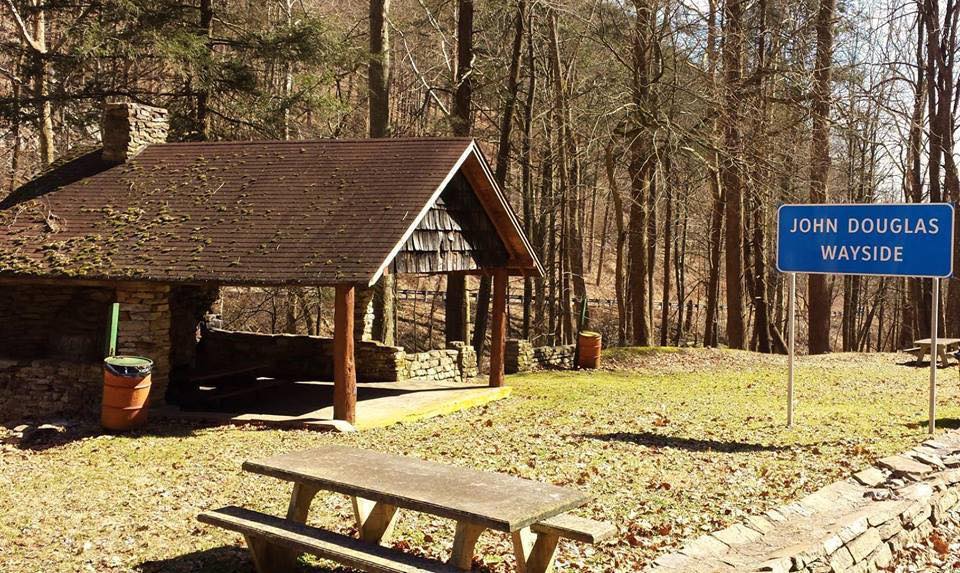
Most of the time when you see John Douglas Wayside between Lebanon and Abingdon, Virginia, your first thought usually isn’t history but more likely, “yikes, I better hit the brakes so the cops won’t bust me for speeding,” I have the tickets to prove this is a legitimate fear.

The real story is that this wayside is named in honor of John Douglas who was a scout at Black’s Fort (now known as the town of Abingdon). In July 1776, Douglas was with a friend, William Benham, on a mission to warn residents of the Clinch Settlements of an impending Indian attack. Douglas and Benham had stopped along the way to eat lunch on a flat rock near the sight of the John Douglas Wayside when a shot rang out of the mountains and Douglas was killed. The shooter was never found but was presumed to be a warrior from the Cherokee Indian Tribe of the notorious Chief Dragging Canoe.

The notorious John Douglas Wayside.

I’ve driven by this wayside for decades and never knew this story until recently. It just goes to show how much history is on virtually every street corner that we often take for granted. So, the next time you pass through the area slow down for the police, stop by to take a little break from driving and soak in a little slice of history. –

Shane

Blog

We thought it would be great to start sharing songs on Monday to kick off the start to the work week. Of course, using the name Melody is a perfect fit because of our own Melody at Real Appalachia and the obvious tie-in to music. Plus, Melody loves music so, what do ya know, it almost feels like destiny. She isn’t as keen on Mondays but that is ok, she decided to take one for the team.

We thought the perfect song to start with is “9 to 5” by Appalachia’s own Dolly Parton as it is one of the most relatable songs ever for working people. The very first lyrics “Tumble outta bed and I stumble to the kitchen…” hits anyone who works a regular job right in the feels and it continues on from there.

The song is attached to the movie of the same name which also starred Dolly. For anyone who hasn’t watched, the movie storyline involves three women plotting to get revenge on their heartless boss – I mean, who can’t relate to that experience?

So, for all of you who can sympathize, here is the link to the song…and have a happy Monday!