Blog

New Life For A Beautiful Old Country Church With A Shockingly Tragic Past

Shane

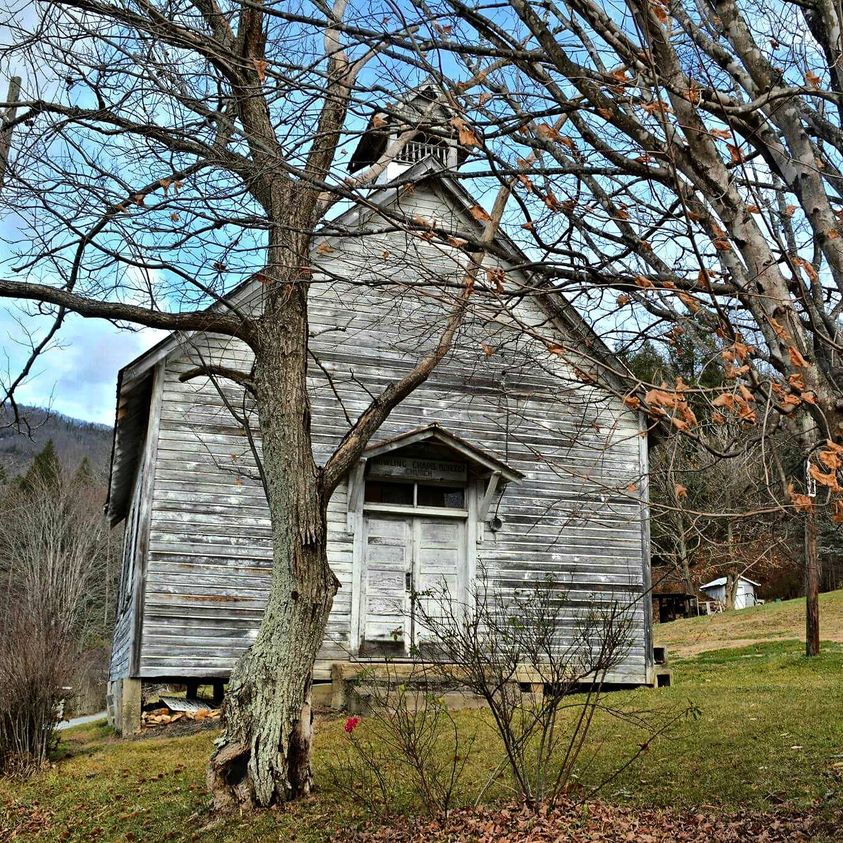
I passed by the Bowling Chapel Methodist Church in Roan Mountain, Tennessee a while back and couldn’t resist stopping for a picture, it drew me in like a moth to a flame. I just thought it was very photogenic and actually knew nothing of its history until I got back home and did a little research. I discovered that in addition to its obvious beauty and charm, it holds a tragic past.

The Bowling Chapel Methodist Church in Roan Mountain, Tennessee.

The church was holding a revival service on a Tuesday evening in October of 1933 with the local constable, John Arnett, leading the choir in singing. According to news reports of the time, Arnett was reaching for his song hymnal following prayer when a shot rang out and a bullet struck him in the back. Arnett lived until that Friday before finally succumbing to the wound.

Witnesses outside fingered Arnett’s cousin, Howard Arnett, in the shooting, stating that he’d fired through an open window in the church. It was determined the murder was the result of backlash caused by John Arnett’s cracking down on rampant lawlessness in the area. In the end, Howard Arnett, Dayton Arnett and Robert Julian would each be sent to prison for their role in the shooting. A senseless tragedy in what is usually considered a safe place of worship and fellowship.

The Knoxville Journal coverage of the shooting at Bowling Chapel Methodist Church.

Bowling Chapel Methodist Church is an alluring landmark that combines captivating appeal, history and tragedy under one roof. Time has moved on and the people have passed away or attend a different facility, yet the church still stands tall, mysterious and, in its own weathered way, quite beautiful.

The updated Bowling Chapel Methodist Church following repairs.

The last time I passed by, the church had been given a facelift with a new roof and numerous repairs and upgrades. It looks primed to last for another 100 years now. I found out the repairs were paid for by a local businessman, Floyd Storie, who funded the project to save the church from falling into ruin. Storie had attended the church as a small boy with his family and it had a special place in his heart.

Sadly, it would become a dying act as Mr. Storie would pass away shortly after its completion in October of 2018. He had been too sick to attend a homecoming celebration for the remodeling project held a week prior to his death but Floyd Storie was on the hearts and minds of attendees grateful for his efforts.

Floyd Storie might have passed away but his legacy lives on with the Bowling Chapel Methodist Church. Count me among those who are grateful for his kind efforts.
Christmas in January(?): The Tradition of "Old Christmas" in Appalachia

Shane

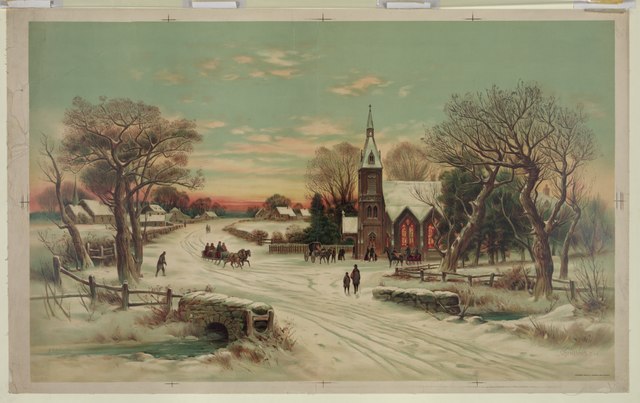
A lot of folks aren’t aware these days that many Appalachians once celebrated Christmas on January 6th rather than the traditional December 25th holiday we are accustomed to these days. It is known as “Old Christmas” and was brought to America from Great Britain.

The change dates back to 1752 when the British Parliament voted to adopt the more Catholic-friendly Gregorian calendar rather than the Julian calendar that was used previously. While it sounds simple enough, an issue arose due to the fact that the Julian calendar had included 11 more days per year, thus adjustments needed to be made to correct this issue.

Lo and behold, dates were moved to correct the discrepancy which led to Christmas being on January 6th after the adjustment. As is often the case, many in the public didn’t appreciate the government meddling with dates so there was resistance to this change in some quarters. Much of this happened in the 1800s, a time when immigration from Great Britain to America was at a peak, so many of these immigrants brought their customs (and stubbornness with them) or were not aware of this change.

Appalachia was primarily populated by Scots-Irish immigrants so it stands to reason that many continued to practice the old traditions. One of these traditions for many families was to celebrate the “12 Days of Christmas” from December 25th (“New Christmas”) to January 6th (“OId Christmas”). Many folks in Appalachia even took all 12 days off from work to celebrate.

It was a far simpler time back then so it isn’t surprising that the celebrations were less elaborate than what we often see today. As would be expected, the church and Bible were major components of the celebration with a focus on family and a Christmas meal, while maintaining a solemn reverence for the birth of Jesus.

Gifts consisted of homemade toys and clothing. Holly, pinecones, and other locally grown plants were used for decorations. Music, singing, and storytelling provided the entertainment and an opportunity for bonding.

Old Christmas hung around in many parts of Appalachia well into the 1900s but slowly faded away as the December 25th Christmas date became more and more commercialized and the standard in America.

I know I have a tendency to be a bit nostalgic but surely I can’t be the only person who’d like to go back to having 12 days off from work…

The Surprising Origin of Moonshining in Appalachia

Shane

The practice of moonshining has a long and complicated history in the Appalachian Mountains. Many folks think of moonshiners as the sneaky-but-lovable hillbilly rascal who comes across as a little shady but mostly harmless, much like the infamous Popcorn Sutton. This simplistic perception doesn’t tell the full story as moonshine operations of yesteryear often bore a strong resemblance to organized crime syndicates akin to the mafia.

The origin of the name “moonshiner” is widely believed to be due to it being made after dark “by the light of the moon” to avoid detection from law enforcement. The name is thought to have been brought over from England as a version of their similar-meaning word “moonraker.” Other names given to the various types of homemade liquors are corn squeezin’s, hooch, mountain dew and white lightning.

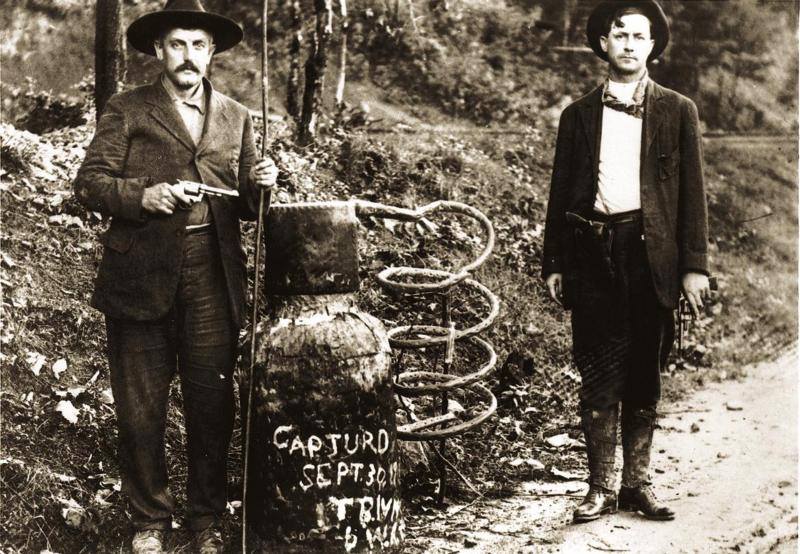
A captured moonshine still.

A copper pot was most commonly rigged into a moonshine still to ferment a combination of corn, yeast, sugar and water (or other ingredients) by heating it to make the potent liquor. The recipes for the liquor originated from the many Scots-Irish immigrants who moved into the Appalachian Mountains.

Early moonshiners mostly made their homebrewed concoctions for their personal use. More and more people entered the trade once it grew into a profitable business. The illegal moonshine trade boomed following the enactment of the 18th Amendment to the Constitution in 1920, which began a 13 year dry spell from alcohol known as Prohibition. Prohibition combined with the onset of the Great Depression in 1929 made moonshining an increasingly attractive, albeit illegal, option to make money for many already impoverished Appalachians.

A bust on a moonshine operation was always a cause for a nice photo op.

Whereas mafias are often referred to as “crime families,” many moonshining operations were literally made up of family members. The batches of moonshine had to be brewed, bottled and then transported to market leading to jobs for dad, mom, son, daughter, cousin, grandpa, etc.

Cars were souped up to outrun the police to get the liquor out of the mountains. Commonly known as ridge runners, these bootleggers would load up their vehicle with moonshine, cover it up to try to hide it and then speed down the winding mountain roads. Ridge running of the enhanced cars eventually led directly to the creation of NASCAR.

The federal government has long attempted to crack down on moonshining. Government officials known derisively as “revenooers” have historically been the archenemy of moonshiners. The name revenooer stems from government attempts to enforce tax revenue laws as an excuse to arrest the moonshiners.

The barrel says 1927 so it would be safe to assume it dates back to then.

Local citizens have had mixed relations with moonshiners through the years as many of them have been neighbors and customers. Appalachians in general have long resented government intervention into their lives and considered revenooers an extension of that meddling, even if they themselves didn’t participate in moonshining. There was less sympathy for many moonshiners during the Prohibition/Great Depression years. The high profit margins had led many moonshiners to become increasingly hostile and threatening in protecting their “business” by intimidation and other aggressive means, leading to local backlash against them in many places.

A still named Old Edy in Red Ash, Virginia.

The number of homebrewing moonshiners has dropped considerably in recent years for various reasons. One factor has been the shrinking profit margins on moonshine which has made growing marijuana and the illegal prescription drug trade more lucrative industries. Unlike drug dealers, the remaining moonshiners are generally tolerated, and in many cases beloved, by the local public – aside from people who have strong religious or similar moral objections.

I used to know several practitioners of the art of moonshining but since moving I’ve lost all my contacts. Fortunately, I live within striking distance of the “Moonshine Capital of the World” Cocke County, Tennessee, and hope to make new friends…for medicinal purposes, of course.

The Mystery And Mayhem Of The Burke's Garden Varmint

Shane

I always enjoy a good local story and try to share a few of those here on TAP as I stumble onto them. One such tale is the story of the “Varmint of Burke’s Garden” that dates back to the 1950s in Tazewell County, Virginia. The reason this story jumped out at me was due to the fact that I once knew a varmint from Burke’s Garden back in my (very brief, thank God) loan collecting days. The scallywag (I try to use that word whenever I get the chance, I just like the sound of it) had gone severely delinquent on his truck loan and made off with an old Chevy he had kept hidden for a good while by using a “Farm Use” tag. We finally tracked him down and recovered the truck after much chase and trickery. We went so far as to have a guy hide under some leaves behind a tree stump to jump in the truck and take off with it while we had his attention diverted. The plan worked to perfection and that is enough about that varmint, this story is about THE Varmint of Burke’s Garden…

The Burke’s Garden Varmint was a wild creature that roamed Burke’s Garden back in the 1950s that decimated the local livestock numbers. He is said to have killed well over 400 sheep in his nearly year-long reign of terror. Local residents were at a loss to stop the predator and were unsure as to what it was that was doing so much damage (estimated at over $32,000 worth in total). Traps and other attempts to stop the killer were futile.

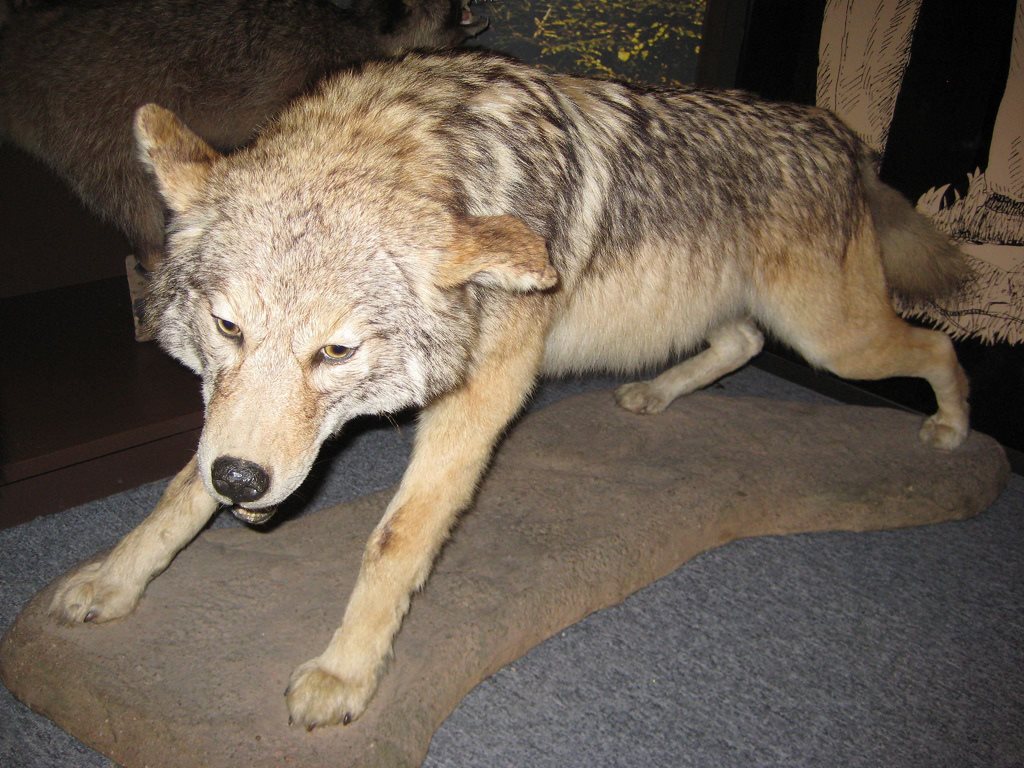
The stuffed Burkes Garden Varmint that terrorized the area. (Photo by Justin van Dyke)

The Tazewell County Board of Supervisors decided to contract with an experienced big-game hunter from Arizona, Clell Lee, to track down the menace. Lee arrived to a lukewarm reception from the local community but went about his business of finding out what had been the source of so much destruction. He soon discovered a track located inside a block of ice that indicated it was the work of a large coyote. The finding was quite surprising to local residents as there hadn’t been a coyote sighting in the area before.

Burkes Garden, Virginia.

Lee’s trained dogs soon picked up the scent of the coyote and the hunt began. Lee, along with the sheriff and other local residents, headed out to find the animal and put an end its killing spree. The first night ended without finding the coyote but Lee insisted they start back out again the next morning at daybreak. The decision was somewhat controversial as the following morning was a Sunday and local citizens had always held that was a day of rest and going to church, not suitable for hunting.

The dogs soon found the scent of the coyote that morning and gave chase in a hunt that lasted for several hours. Finally, in a scene fitting for an old western movie, the coyote was found and shot dead in the Joe Moss Cemetery by a Burke’s Garden resident named Alfred Jones. As you might expect, the coyote wasn’t given a proper burial despite meeting his Waterloo in a cemetery. The Varmint was found to weigh in at 35 pounds and 4 ½ feet in length with fangs extending for a full inch.

The coyote was then hung from a tree just outside the local courthouse where it was held on display for a good while with an estimated 7,500 people coming to view its body. A celebration dinner was held in Clell Lee’s honor and he was quite the local celebrity. The Burke’s Garden Varmint was stuffed and now resides on display inside the Crab Orchard Museum in Tazewell, Virginia.

As for that other varmint from Burke’s Garden, I saw him not too long ago and he is alive and well – not that I want him shot or anything. I wouldn’t be at all surprised to hear that he was still creating mischief in the area…

New Year, Old Traditon

Shane

The first day of 2023 is upon us and with the New Year comes an old tradition that many of you are familiar with already. It is customary throughout the South and much of Appalachia to eat black-eyed peas and greens (either collard, mustard, or turnip) for good luck and prosperity. There are a few variations to this practice as some say you need to include a pork product in cooking the peas while others say it needs to be served with cornbread.

The practice in the South supposedly dates back to the Civil War when the troops of Union General Willam T. Sherman pillaged and plundered many areas of the South on his march to Atlanta. Sherman’s troops thought they took or destroyed all of the usable food but left behind the black-eyed peas unaware of their nutritional value. The Southern people ate the black-eyes peas to make it through the winter months and began to see the peas as a sign of good luck.

The traditional New Year’s Day meal in Appalachia.

Many participants in this tradition say that you need to eat exactly 365 peas to ensure good luck throughout the year. If you come up short of 365 you will not have good fortune on an equal number of days in the year. If you eat more than 365 it will subtract your days with good luck by an equal amount to the number you go over.

The peas themselves are said by some to represent coins while the greens stand for the “green” in dollar bills. People who add cornbread to the meal do so in the belief that it signifies gold. The pork is added for multiple reasons – pigs have long been seen as a sign of health and wealth in the South. Pigs also are known for their inability to turn their head around fully to look backward so some say it means they are always looking ahead to the future.

Add all the ingredients together and it makes for a tasty meal that I participated in for the first time four years ago. I look forward to eating them again this year but I plan to eat a lot more greens this year – whether I like them or not…

The Hurricane Creek (Kentucky) Mine Disaster Of 1970

Shane

December 30th marks the 52nd anniversary of one of the terrible mine disasters in our Appalachian history. Amy Pennington Brudnicki is a native of Hyden, Kentucky, and has kindly accepted our request to write about the explosion and aftermath that hit her hometown. Here is Amy’s account:

Hurricane Creek Mine Disaster

December 30th, 1970, began as any other day in the coalfields of southeastern Kentucky. On this morning, a group of hardworking miners started their day before the sun came up. They’d never see another sunrise. Shortly after noon, disaster struck when the Finley Coal Mine – located on Hurricane Creek in Hyden, Kentucky – exploded, killing all thirty-eight men inside.

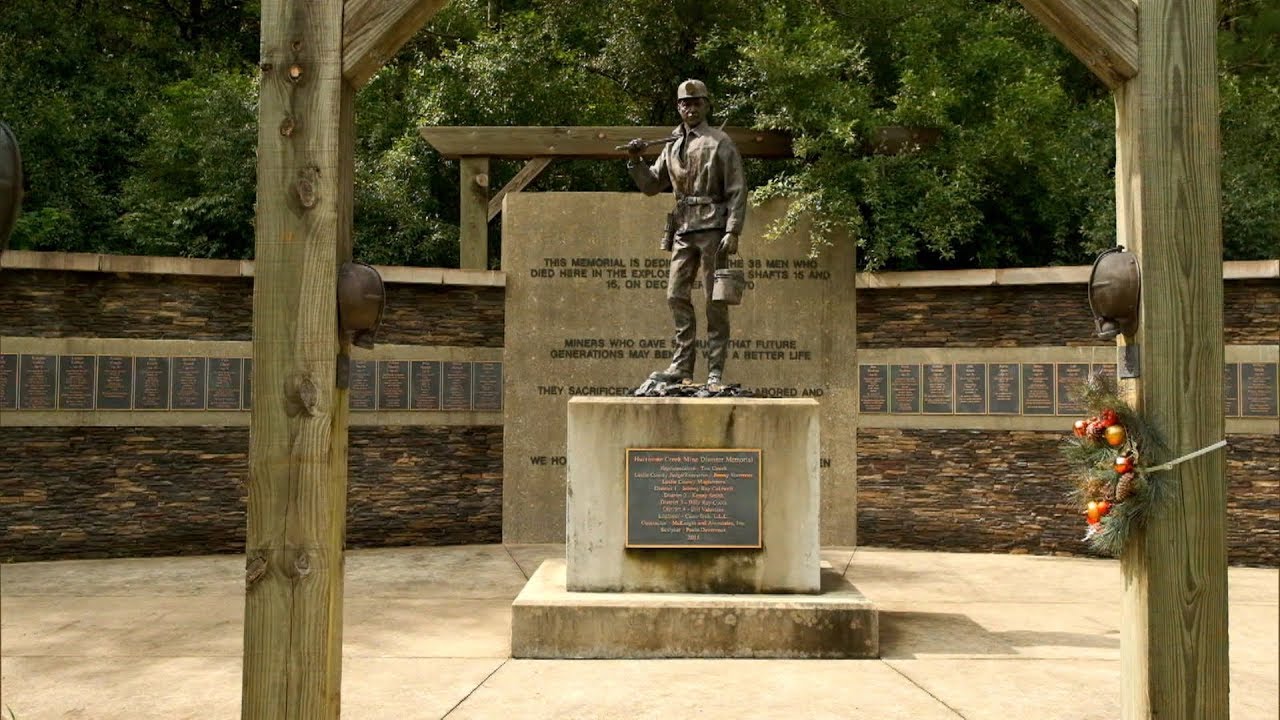
Marker memorializing the miners who perished in the Hurricane Creek Mine Disaster of 1970.

The lone survivor, A.T. Collins, was about to enter the mine when the explosion occurred. The blast pelted him with debris, ripping his clothing and tearing the watch from his wrist. Lucky to be alive, he was left battered and bruised – blown some sixty feet from the mine’s entrance.

In the seventies, when the disaster occurred, all homes on Hurricane Creek that had phone service were on a party line – one phone line shared by many households. My aunt, who was visiting from Alabama, was on the phone with her husband when the officials from the mine came on the phone stating that they needed her to clear the line, that the mine had blown up.

Popular Mechanics coverage of the disaster.

I can only imagine the chill that she experienced when she heard those words because I know she felt the explosion shake the house. My Granny’s house, where she was visiting, was just around the bend from the mines.

Memorial to the miners at the location of the Hurricane Creek mine.

Thirty-eight men went underground that fateful day – miners who labored hard, day in and day out, for the families they loved. As darkness fell, those men – the husbands, fathers, grandfathers, uncles, sons, friends, and neighbors – didn’t return home.

Lives were forever changed. Routines were forever changed. And hearts were forever broken. The wife who watched everyday as her husband approached the door with coal dust covering his face and a lunch bucket in his hand, she had become a widow. The children who waited for daddy to tuck them in at night, their world had fallen apart. And the mother who had to bury her son- I can’t even imagine her pain. In the blink of an eye, devastation struck these families . . . and the effects are still felt to this day.

In 2011, a memorial was completed on Hurricane Creek in honor of the thirty-eight men who lost their lives on December 30th, 1970. They are the true unsung heroes of Appalachia . . . ~ Amy

Amy is also the admin for the Facebook page dedicated to the memory of the miners who were lost that day. You can check it out at the link below:

https://www.facebook.com/pages/In-Memory-of-the-1970-Finley-Coal-Mine-Disaster/107344462639601

Beauty Is Where You Look For It

Shane

I flipped back through my photos for a particular picture I’d taken a few months ago. I noticed while I was going through them that I haven’t taken hardly any new pictures of my surroundings in almost a year. I am by no means a great photographer but I do love taking a picture to capture a moment in time.

At first, my explanation was that I “haven’t seen anything interesting” but I know that’s not true because I live in the most beautiful part of God’s green earth and I pass all sorts of cool things on my way to work. I made it a point to pay closer attention on my next drive and it was unreal how many beautiful things I saw – rolling farmland, old barns, unique old buildings, etc. It was like a whole world opened up to me.

I realize that I’d fallen into the trap of taking such beauty for granted. The problem wasn’t with my environment, it was with my attitude and awareness. I firmly believe we tend to find what we are looking for – if you’re looking for beauty, you’ll find beauty. If you look for the bad and negative, then you’ll surely find it.

I am happy to say my eyes have been reopened. One thing I love is fog so I take a lot of pictures of it – what are your favorite things to photograph?

Christmas in Appalachia

Shane

Shane and Melody discuss what Christmas is like in Appalachia. Some of these traditions are native to Appalachia while others are more universal. The atmosphere at church the week before Christmas is joyful, with treats handed out in old-timey brown paper bags. They standard items inside were candy, an orange or apple (or both) and a pack of peanuts, along with a giveaway item such as a pencil, pen, bookmark, etc. We discuss this tradition and several more in the video below.

We would love to hear more about your traditions and customs, whether you live in Appalachia or somewhere else in this great big world.

Holler Life

Shane

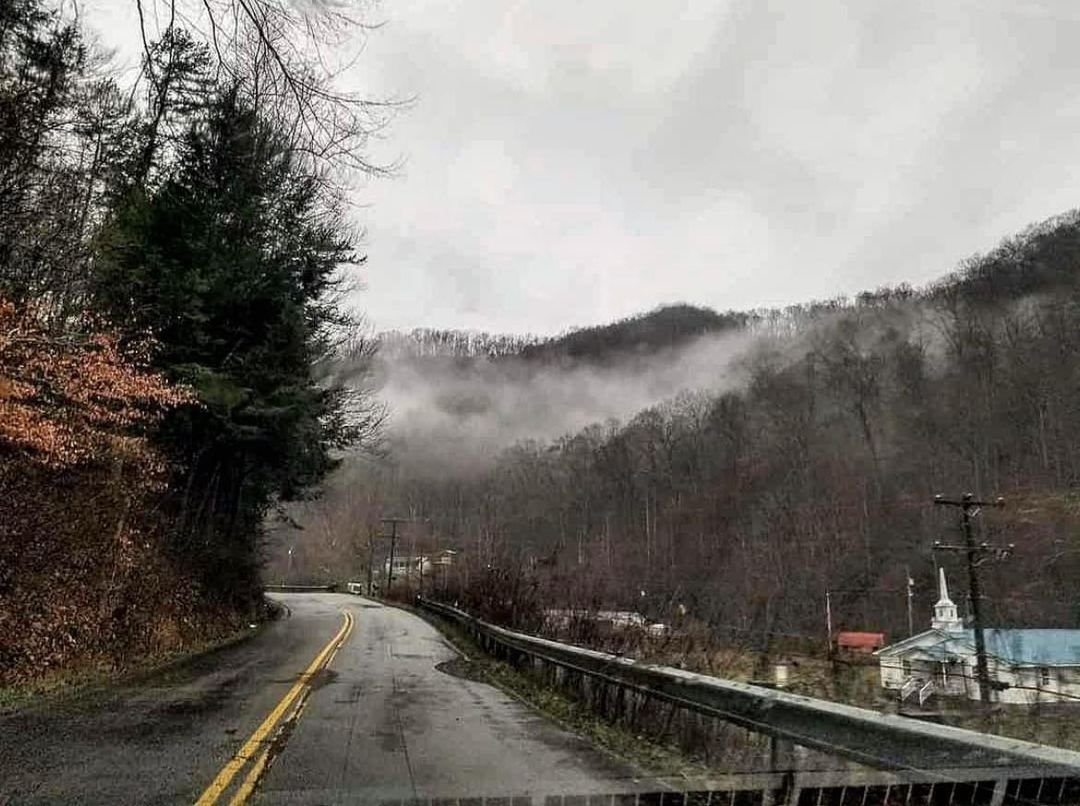
It has been almost exactly 2 years ago since I took this picture of a typical Appalachian holler one bitter cold winter morning and wrote these words in about 5 minutes while sitting in my car waiting for the windshield to unfog. I can still feel that moment like it was yesterday, I just glanced up the road and it spoke to me as if the mountains were alive. I still stand behind it as much today as ever – there’s nothing like a good ol’ Appalachian holler. This picture and words have been seen over a million times so I think a lot of people have a connection to these ol’ hollers. Anyways, feel free to share.

A typical Appalachian holler.

This is what we call a holler. This is a West Virginia holler to be more specific. You can usually tell you’re in a holler when you look around and see mountains in pretty much every direction; you’re on a road with no painted lines; and, a dead giveaway, when you see a dog standing right smack dab in the middle of the road staring at you like you’re about to play a game of chicken. A holler has a head and a mouth…it also has plenty of eyes because if you happen to be a stranger driving up or down the holler, someone has more than likely taken notice – an informal neighborhood watch, if you will. If you live in a holler then you probably know every Tom, Dick and Harry that lives in the holler with you and you’re probably kin to more than a few of them. You probably know everybody’s business whether you want to or not and they know yours. If you’ve ever driven up the wrong holler, there’s a 99% chance you had to use a stranger’s driveway to turn around. It doesn’t matter how many times the people that put up the road signs spell it h-o-l-l-o-w, it’s a holler – it only makes them look pretentious to spell it that way. You can live in a holler and still holler at someone but that’s a story for another day.

Southern Highlanders (of Appalachia) From 1947

Shane

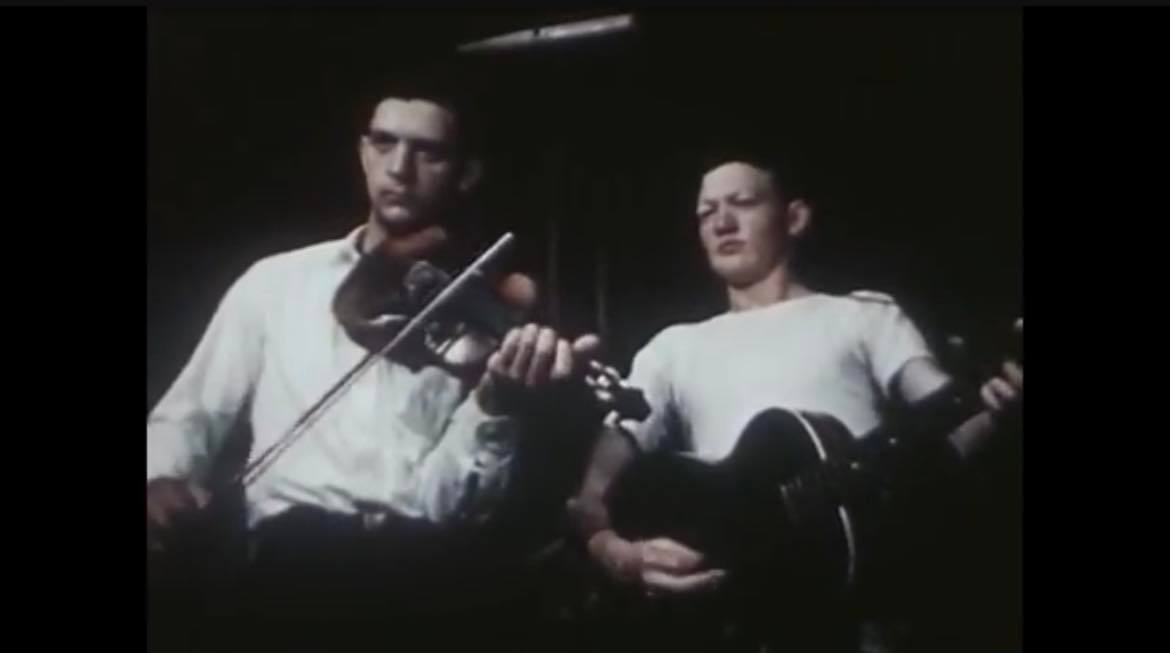
Southern Highlanders was a part of the Ford Motor Company’s “Americans at Home” series and tells the story of folks living in the Great Smoky Mountains in 1947. It has more emphasis on the positive aspects of mountain life as opposed to many other films primary focus on poverty. The film captures the music, faith, and lifestyle of rural Appalachia as well as anything I have watched from the era.

This is the only episode of the Americans at Home series that I’ve seen so far but it must’ve been designed to have more of an uplifting tone and take on the subject matter they present. I like to watch things that leave me feeling more of a sense of pride and celebration rather than gloom and doom, as is too often the case.